For many people, public restrooms are not neutral spaces. They're filled with uncertainty, where small details can spark hesitation, discomfort, or outright avoidance. These barriers shape daily life. They affect how long someone stays out, where they choose to go, and whether they feel free to take part in public life at all. Tork asked: how might we design for a broader range of human needs while working within the constraints of facilities management?
“I have a bag of wet wipes and hand wipes and hand sanitizer in my bag because it's just... some of the places are really just gross.”
Nikki, Mom
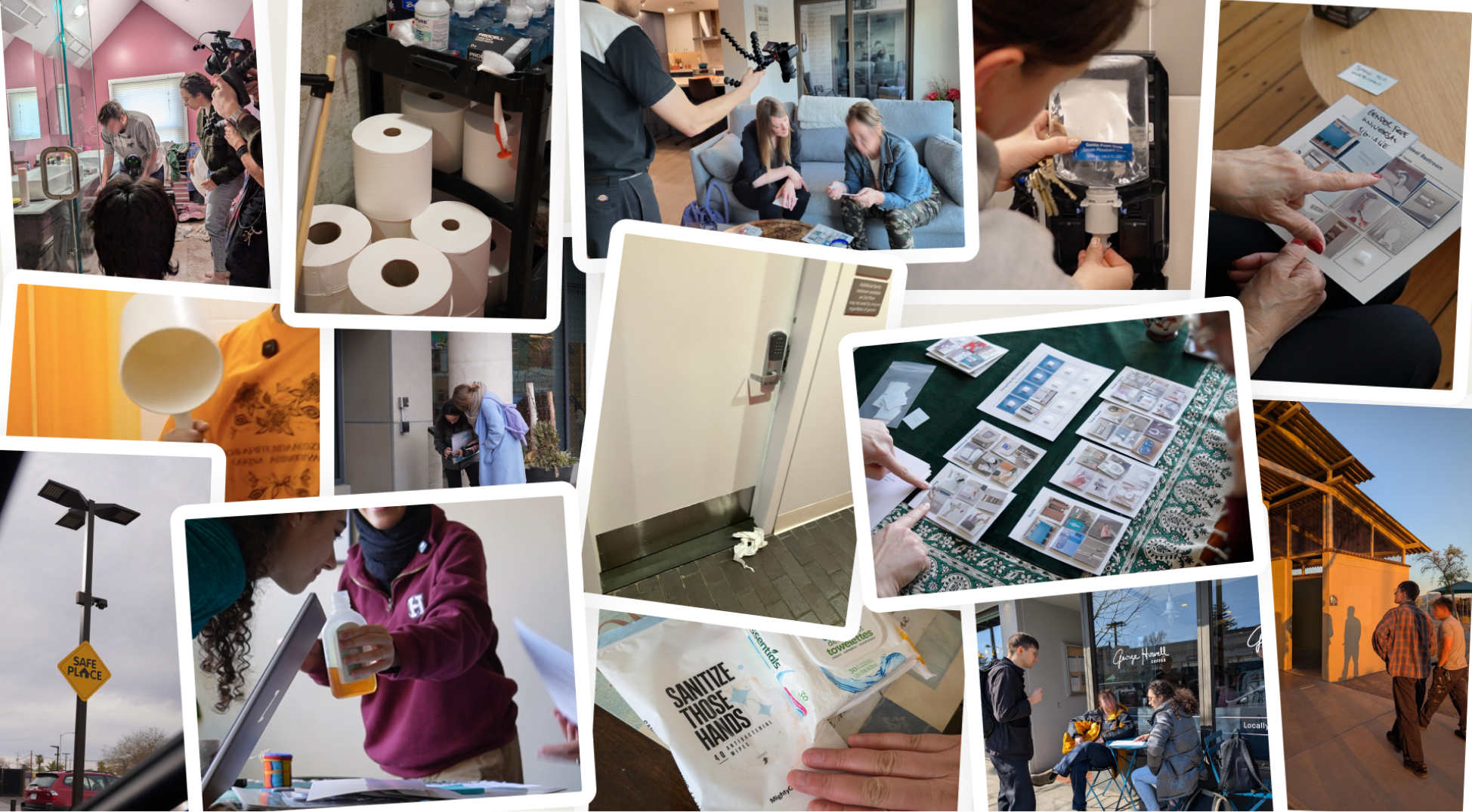
Risk of Contamination
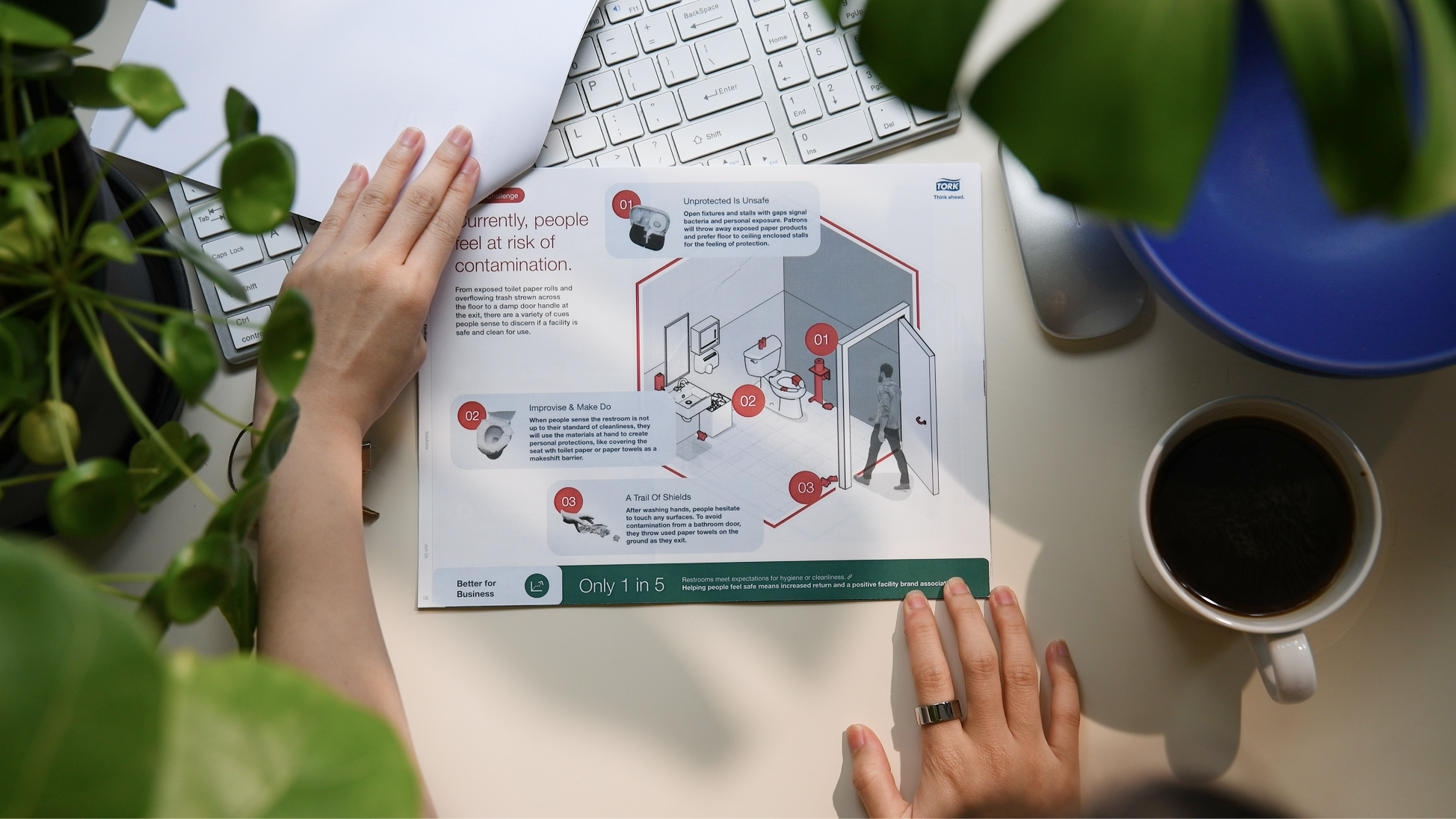
Exposed toilet paper rolls, trash strewn across the floor, a damp doorknob at the exit. People read these signals to judge whether a space is clean enough to use.
Feeling Overwhelmed
Harsh lighting, strong scents, the noise of strangers close by. A restroom can offer a moment of privacy, or it can put every nerve on edge.
Uncared For
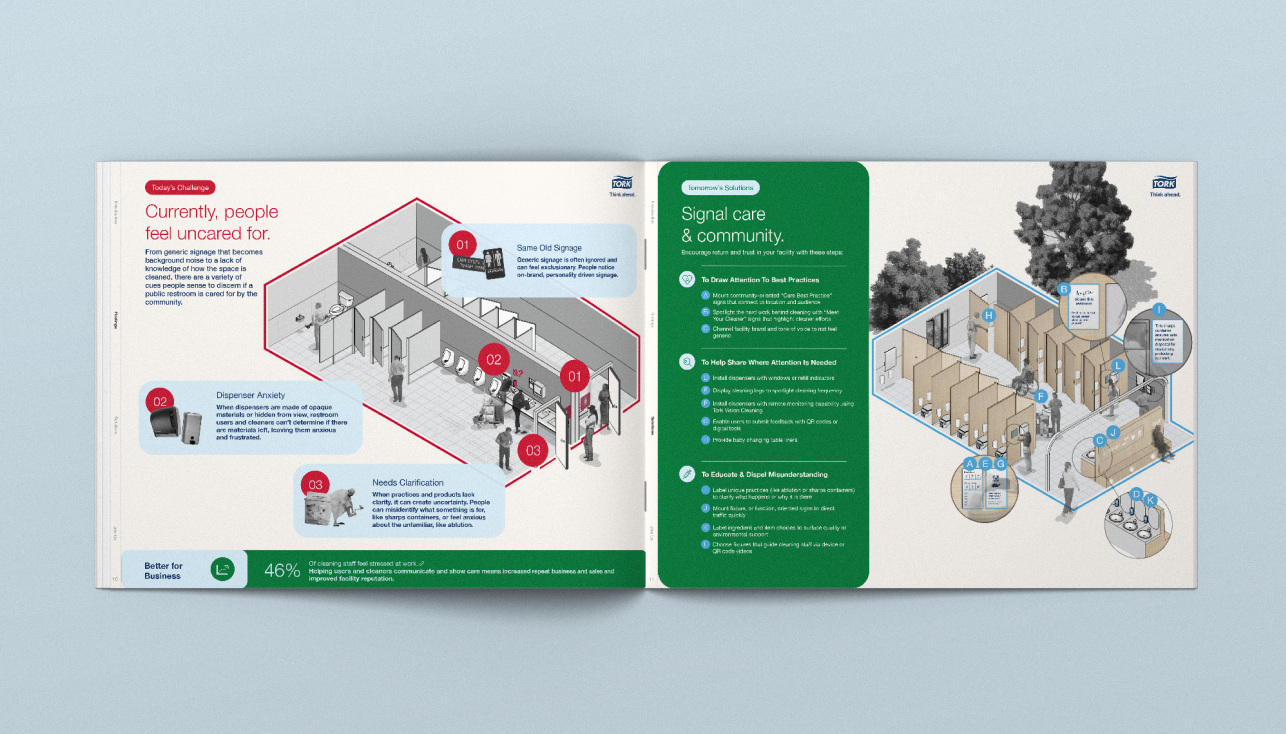
Generic signage fades into the background, and nothing shows how or when the space gets cleaned. Without those signals, people assume no one is looking after it and that the responsibility isn't theirs either.
“Only 1 in 5 restrooms meet expectations
for hygiene or cleanliness.”
Tork Global Study
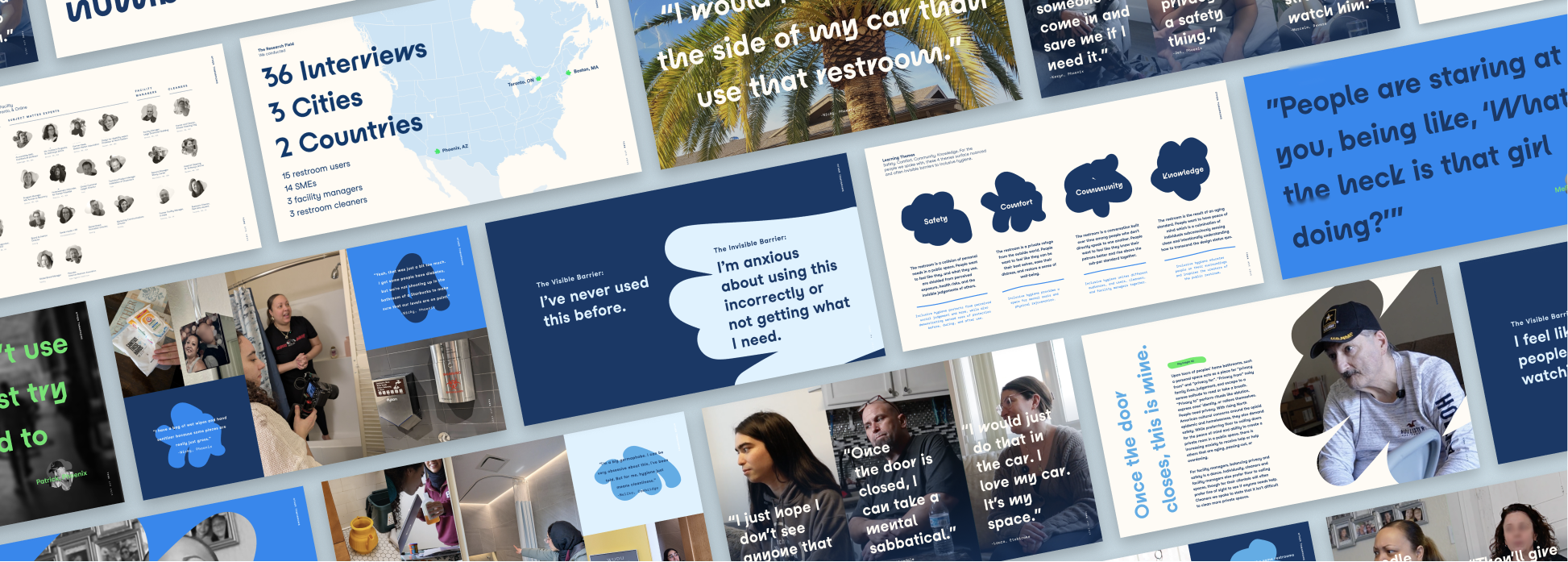
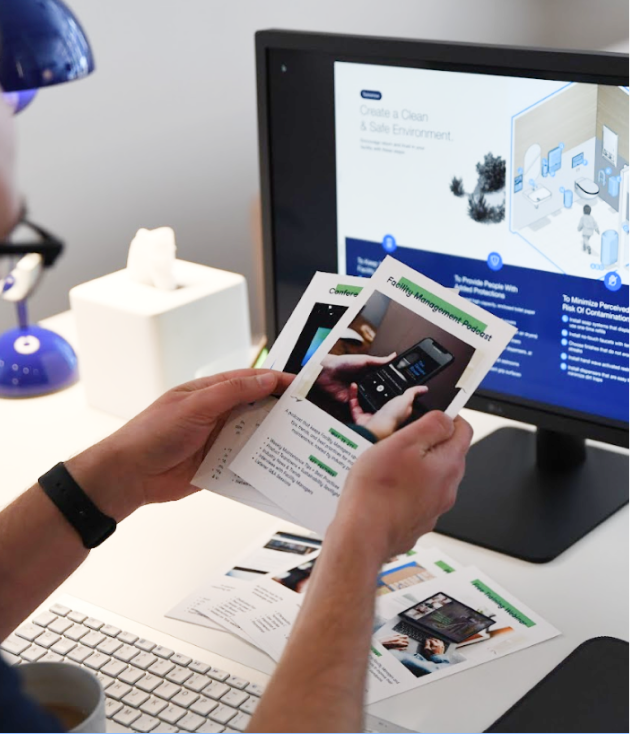
We designed an illustrated guide for facilities managers that brings together research, real stories, and practical interventions to show how restrooms can better support a wider range of people. Side-by-side diagrams and scalable recommendations help teams make meaningful improvements within their existing constraints. We tested the playbook with facilities managers, and what we heard pushed us to make the tools more practical and actionable for the realities of their day-to-day work.
You can find the playbook on Tork's website.
Other Tomorrows
Adam Lewandowicz
Jen Ashman-Stauss
Nicole Nassif